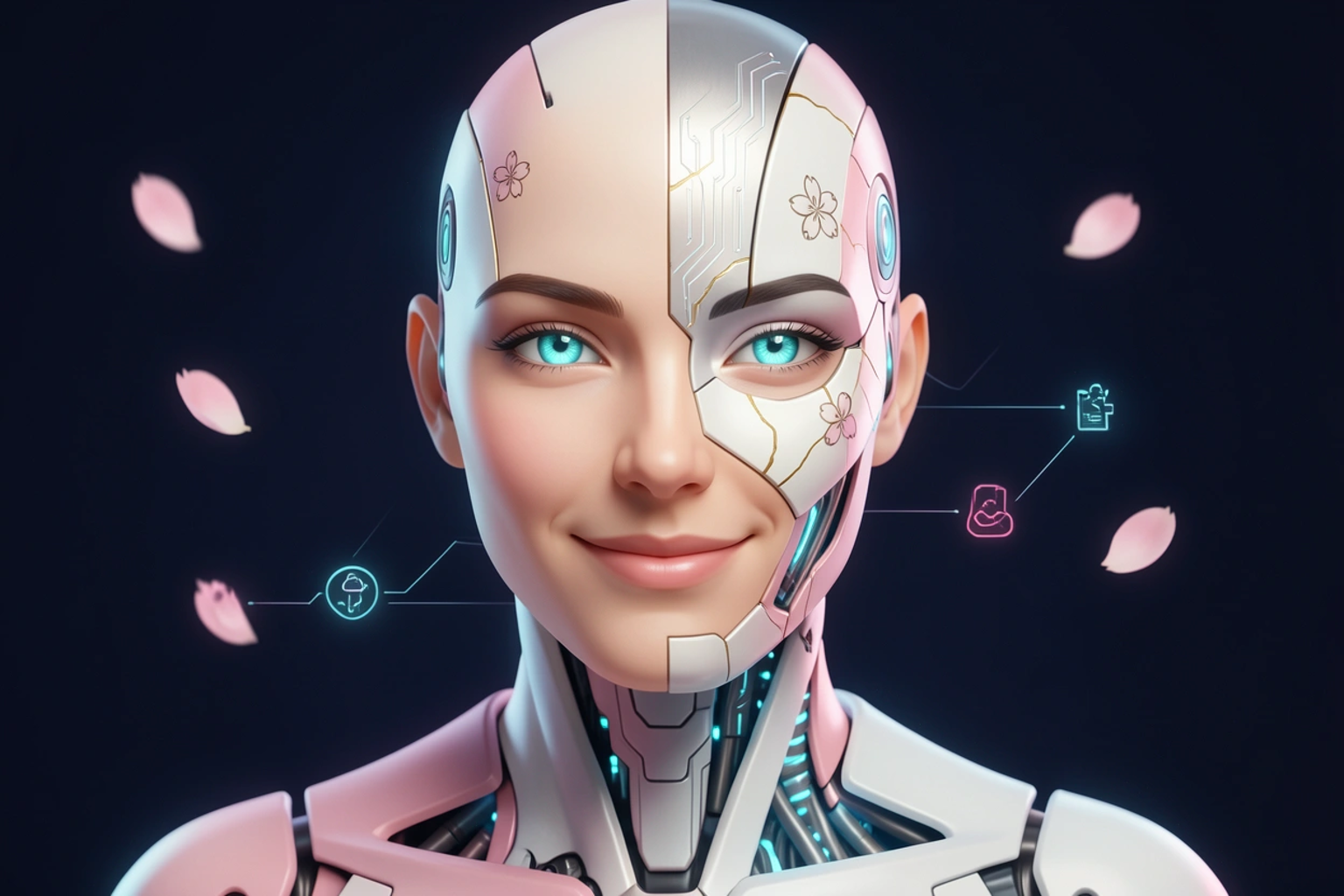
The problem wasn't that we didn't have AI. We had too much of it, scattered everywhere. A model for this, a model for that, an internal dashboard for tickets, another for support, a Notion workspace nobody could fully search, a payments database you needed to know SQL to touch. The intelligence was all there. It just had a different doorway for every room, and most people couldn't find the doors.
So I built one door. It's called SakurAI — a play on sakura, the cherry blossom, and AI — and it lives in Slack, where everyone already is. You don't pick a model. You don't remember which tool wraps which service. You just talk to the bot, and it figures out what to reach for. This is the story of what that turned into.
The catchy name is the product
This sounds like a joke, but it's the most important design decision in the whole thing: give the bot one memorable name instead of asking people to remember three to five different AI models and a dozen internal services.
Adoption is the real bottleneck with internal tooling. The most capable system in the world gets used by nobody if using it means knowing that this task goes to that model through this integration. Every fork in that decision tree sheds users. Collapse the tree into a single name — SakurAI — and the cognitive cost of "ask the AI" drops to near zero. A support rep, a developer, and a PM all do the exact same thing: type a sentence in Slack.
The model underneath might be Claude, might be a vision model, might be a coding agent. Nobody cares, and that's the point. The name is the abstraction layer.

Slack as the interface, on purpose
I didn't build a UI. I refused to. Building a UI means asking people to go somewhere new, learn a new layout, and form a new habit — and internal tools die in exactly that gap. Slack is where the company already lives, so Slack is where the bot lives.
That choice paid off in a way I didn't fully expect: conversations are multiplayer. When you ask SakurAI something in a thread, the whole thread is context. Someone else can jump in, correct it, add a detail, and the bot picks all of that up. It's not a private chat session that only you can see — it's a colleague in the channel that everyone can talk to at once. The AI conversation became a team activity instead of a solo one.
The familiar interface did more for adoption than any feature I could have shipped.
One channel per agent
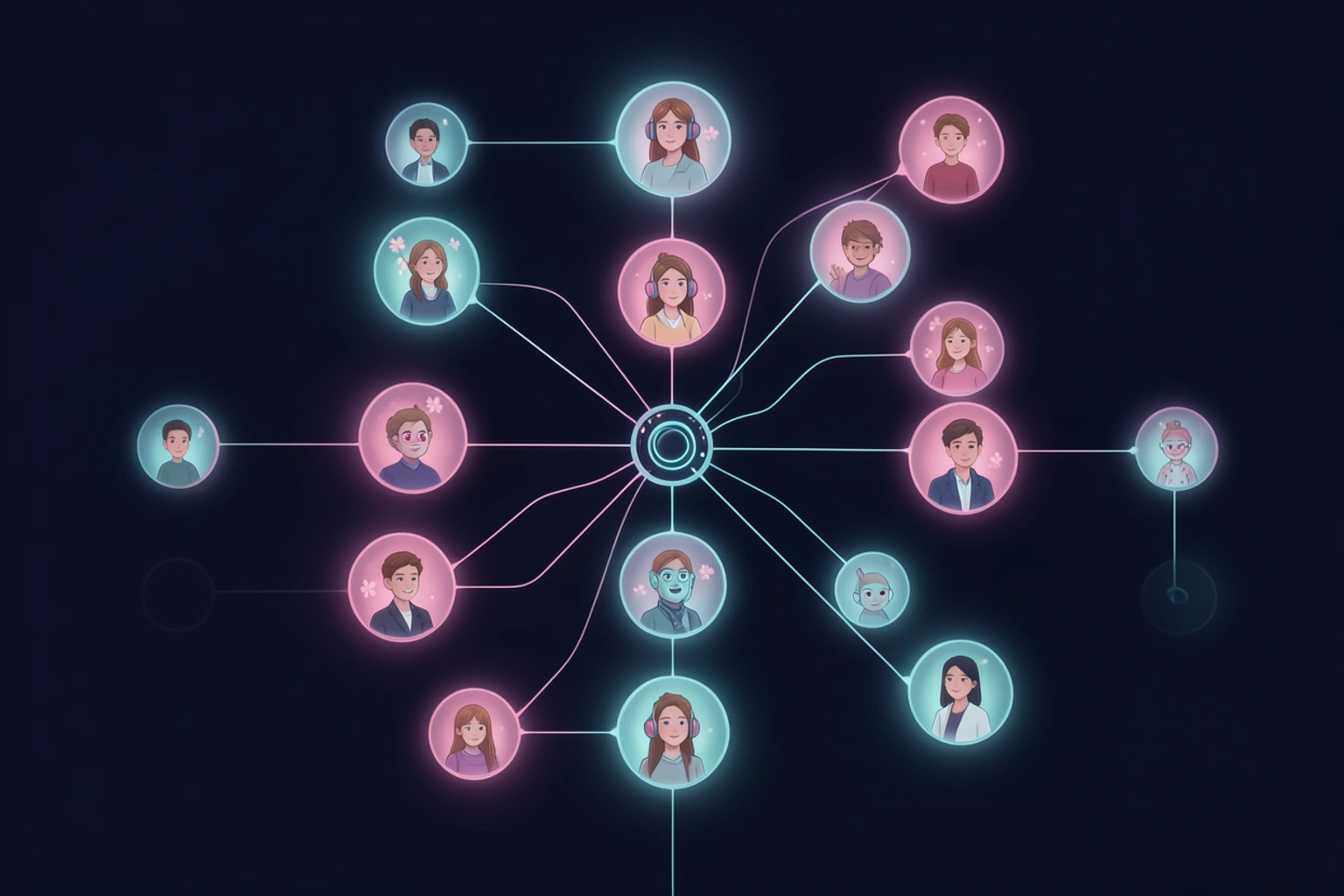
SakurAI isn't a single assistant pretending to be good at everything. It's a roster of specialists, and each one gets its own Slack channel.
There's a mail agent, a product agent, a code agent, a customer-support agent, and more behind them. The channel is the routing. You don't tell the bot which specialist you want — you walk into the room where that specialist lives, and the context comes for free. Ask the code agent to do something in its channel and it already knows it's wearing the engineering hat. Ask the support agent in its channel and it's already oriented toward customers and tickets.
Each agent is, underneath, a markdown file — a system prompt, a set of tools it's allowed to touch, a personality. Adding a new specialist is writing a new file, not building a new app. It's the same idea I keep coming back to: this is org design, just for non-humans. The channels are departments. The markdown files are job descriptions.
What it's actually plugged into
A bot that can only talk is a toy. The reason SakurAI is useful is the set of internal systems it can actually reach, each one wrapped so the bot can use it safely:
- Notion — the internal knowledge base, searchable in plain language instead of by hoping you remember where a doc lives.
- Linear — tickets it can read, create, update, and close.
- Intercom — customer conversations and support history.
- Email — reading, summarizing, and drafting.
- Figma — pulling up the right design by name.
- Sandboxes — isolated environments where the coding agent can actually run code, not just suggest it.
- Slack channels — reading and posting across the workspace, which is how reports and summaries get routed to the right room.
The connective tissue matters as much as the list. Each service is wrapped as a tool the bot can call, knowledge bases like Notion and Intercom are made searchable through retrieval rather than guessing, and where the bot touches real data — payments, user records — it goes through sanitized views that exclude the sensitive fields by construction. The bot is powerful precisely because it's bounded. It can see what it needs and structurally cannot see what it shouldn't.
Three things it does that earn its keep
The capabilities matter less than the work they replace. Here are three that turned skeptics into daily users.
Reviewing user reports
This is the one that surprised people. When a user reports content — say, flagging something as inappropriate or outright illegal — SakurAI doesn't just file the report. It looks at the reported content itself, reasons about whether the report holds up, and comes back with a confirmation and a suggested action.
A human still makes the final call. But the bot did the triage: it pulled the content, evaluated it against policy, and arrived at the desk already saying "this looks like a real violation, here's what I'd do." The slow, draining part of moderation — the first-pass judgment on a flood of reports — gets a fast, consistent first draft. The human moves from finding the problems to deciding on them.
A coding assistant that closes the loop
Ask the code agent to implement a function and it implements it. Ask it to spin up something new and it scaffolds it in a sandbox. Ask it to review a pull request and it reviews it — and when the work checks out, it can approve the PR.
The important word is loop. This isn't a chatbot that hands you a snippet to paste. It reads the ticket, writes the code in an isolated sandbox, opens the pull request, runs the review, and pushes the change toward done — all from a sentence in a Slack channel. It's the factory from my last post, pointed at the everyday backlog and driven by whoever needs the work, not just whoever can code.
Release notes that write themselves
Nobody enjoys writing release notes, so they get written badly or not at all. SakurAI reads what actually shipped — the merged work, the closed tickets — and drafts the notes. A genuinely tedious recurring chore became a sentence and a review.
What a sentence turned out to be worth
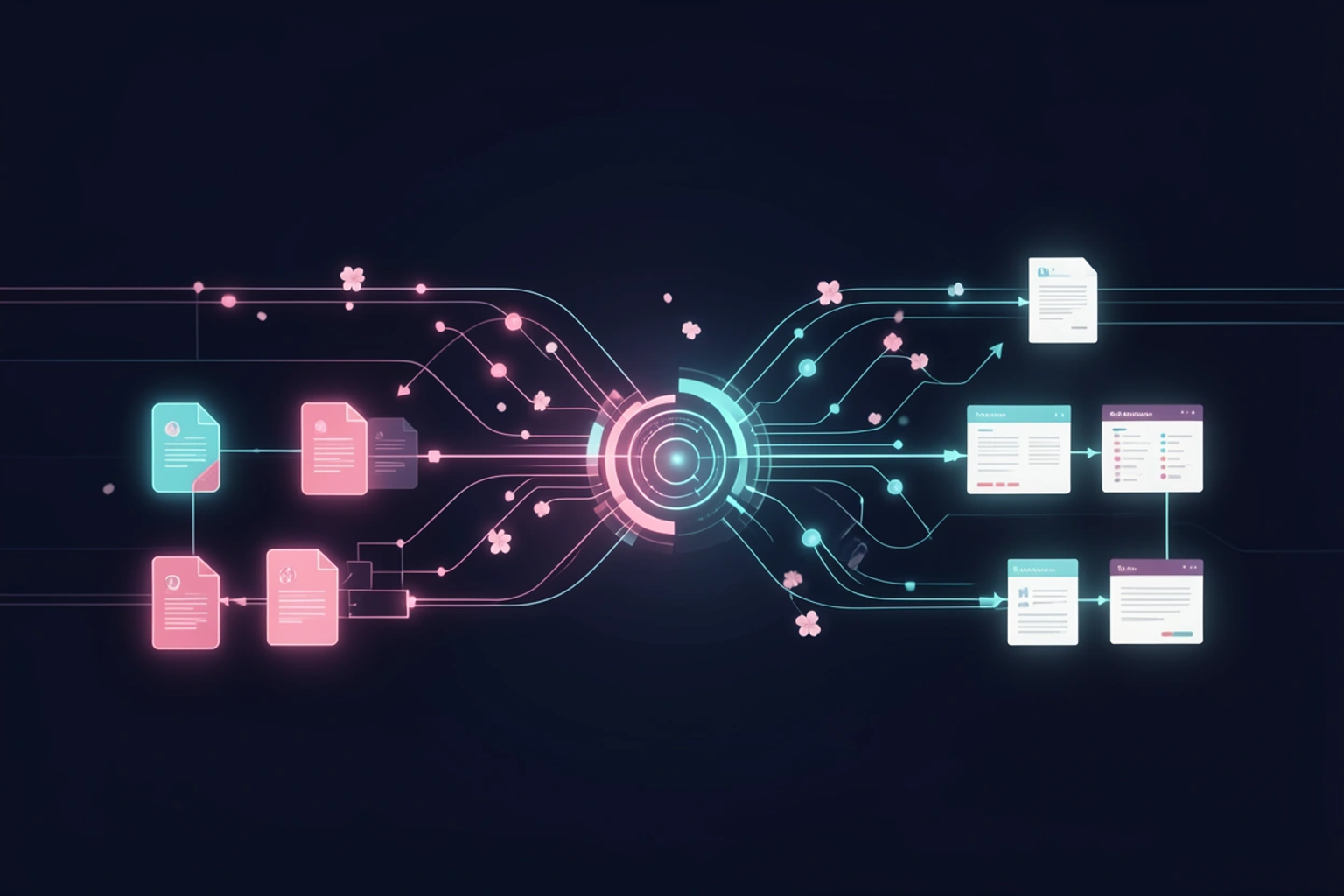
The pattern under all of this is the same, and it's the thing I keep finding everywhere AI gets genuinely useful: the interface to the company became a sentence.
"Summarize this user's support history and post a report to the support channel." "Create tickets for every technical issue reported in here today." "Read this ticket and implement it, then open a PR." "Pull up the latest design for the new homepage." None of these required a new screen, a new login, or a new thing to learn. They required typing what you wanted into a channel you were already in.
That's the whole bet. The AI being smart is table stakes now; what it's worth inside a company depends on whether the doorway is obvious enough that nobody has to think about it. One name, one interface everyone already uses, specialists behind the right doors, and real tools wired in with the dangerous parts walled off.
What I'd tell you to copy
Adoption was the hard part all along, not capability. The catchy name and the familiar Slack interface did more for real usage than any single feature I shipped — people use SakurAI because asking it costs them nothing, not because it's clever. And the parts that make it safe to hand that much reach to a bot are the boring ones: every tool wrapped, every sensitive field walled off behind a sanitized view, every specialist scoped to its own room so it never has to guess what hat it's wearing.
The work it took over was never the glamorous work. It was the tedious first-pass judgment — triaging a report, reviewing a routine PR, writing the release notes nobody wanted to write. That's exactly where a fast, consistent first draft is worth more than a slow perfect one, and where a human deciding on the output beats a human producing it from scratch.